
International Conference and Expo on
Clinical Microbiology
June 17-18, 2022 | Online Event
Antimicrobal resistance
Antimicrobial resistance (AMR) is one of the century's most important global public health issues. Antibiotic resistance occurs when bacteria and fungi acquire the ability to resist antibiotics that were designed to kill them. This indicates that the germs are not destroyed and continue to multiply. Antibiotic-resistant bacteria produce infections that are difficult, if not impossible, to treat. Antibiotic resistance does not imply that the body has developed resistance to antibiotics; rather, microorganisms have developed resistance to the drugs intended to kill them. Antibiotic resistance in bacteria makes the problem of AMR even more important. Bacteria that cause common or serious infections have developed resistance to each new antibiotic that comes to market over several decades, to variable degrees. Faced with this fact, immediate action is required to avert a looming global health-care crisis.
- Antimicrobial Resistance Testing Detection and Diagnostic
- Drug-Resistant Viral Emergence
- Impact on Public Health
- Microbiological and Clinical Studies
- Molecular Epidemiology
- Resistance Mechanisms
- Resistance to Disinfectants
- Resistome And Proteome
- Viral Resistant Variants

Muhammad Morshed
University of British Columbia, Canada
AC Matin
Stanford University, United States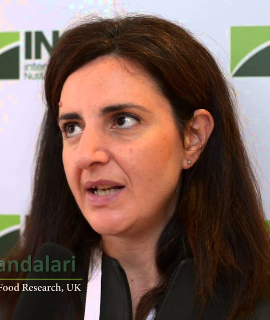
Giuseppina Mandalari
University of Messina, Italy
Adnan Alrubaye
University of Arkansas, United States
Iti Saraav
Washington University in St Louis, United States
Miguel Cruz
Mexican Social Security Institute., Mexico
Miguel Vazquez Moreno
Mexican Social Security Institute, Mexico

Title : Multidrug resistance in burn patients
Dimple Sethi Chopra, Punjabi University, India
Title : CRISPR/Cas12a-powered ultrasensitive immunosensing for the detection of single microorganisms
Fei Deng, University of New South Wales, Australia
Title : Interpretation of non-responders to SARS CoV 2 vaccines using WHO International Standard
Xu Yang, Shanghai University of Medicine and Health Sciences, China
Title : COVID 19 pandemic; a complex mixture of co-infection and comorbidity
Hem Chandra Jha, Indian Institute of Technology Indore, India
Title : O GlcNAcylation enhances sensitivity to RSL3 induced ferroptosis via the YAP TFRC pathway in liver cancer
Abduh Murshed, Tongji University, China
Title : Applications of Artificial Intelligence in Clinical Microbiology Diagnostic Testing
P Hema Prakash Kumari, GITAM Institute of Medical Sciences and Research, India